

Produce great HTML design and tag a report in XBRL
in a single environment.
Introduction
I have been tracking the steady shift towards Digital Financial Reporting over many years, while also encouraging financial executives to get to know the benefits of inline XBRL (iXBRL), which sits at the intersection of well-formed HTML web pages and XBRL tags.
Recently, I was asked by two firms to recommend potential partners that can support a digital-first (HTML) approach. This prompted a survey of tools that can offer to design, tag and review annual reports against the ESEF framework or the CSRD European sustainability framework starting with an HTML layout, rather than converting from PDF.
The good news is, that having predicted the appearance of such tools in an earlier article on Digital Reporting, I found a respectable number of candidates with a range of design capabilities across Europe. These vendors may be at the start of their journeys but had already found customers, not just in ESEF and CSRD reporting, but also local reporting frameworks and were referencing great looking XBRL reports and micro company financial websites as proof points.
This article summarises the key findings, including the shared characteristics that define the current generation and discusses what future developments are needed to move from digital-first solutions and simple XBRL tagging, to truly integrated corporate reporting.
Defining Digital Reporting
Back in 2022 digital financial reporting was a relatively new phrase to come to terms with for European accountants, auditors, and IT departments. Many probably thought they were already doing it by producing a PDF document, often referred to as a “paper under glass” solution.
The European Single Electronic Format (ESEF) reporting framework probably came as a surprise as the requested inline XBRL (iXBRL) format is based upon an HTML document with embedded XBRL tags.
Many corporations simply continued with their existing process and produced their PDF report as usual then tagged the resulting file. This meant relatively minor change to their internal controls and approval process, however the results of this ‘bolt-on’ process were not so good:
- Large and very poorly structured HTML files resulting from the transformation of PDF (absolute position) to HTML format (relative position).
- Poor XBRL tagging resulting from tagging a final document, i.e., searching for the relevant information to tag, and making last-minute changes under acute publishing time pressure.
Here is an example of a broken layout of a Group Income Statement. This report has poorly formed, bloated HTML code and takes several minutes to open because it is so large.
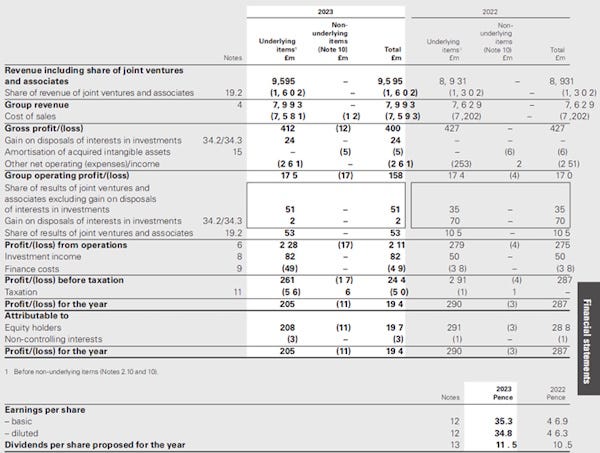
The other knock-on issues caused by this process include the non-compliance with accessibility standards for web content that many companies have publicly committed to in their website policies.
ESEF PDF conversions also suffer readability problems because structure and formatting may be lost. For example, when reviewing the content in another format:
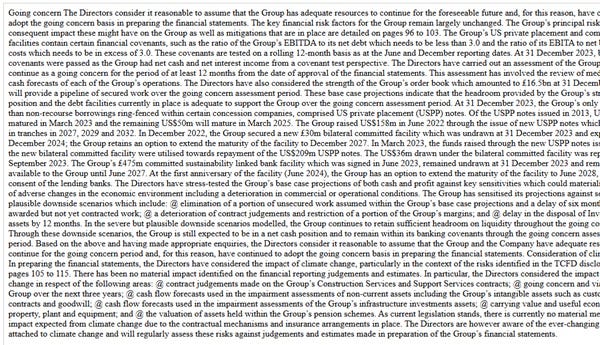
These issues are not simply cosmetic. Converted reports often failed to validate properly using the ESEF quality rules, as the above example did, or presented broken layouts that confused human and machine readers alike. Auditors, who rely on consistent tagging and validation, are especially impacted.
Data tagging using XBRL models also removes the arduous and often error-stricken process of analysing substantial amounts of corporate financial information for company benchmarking. This benchmarking can aid auditors and investors to spot many issues. Poor quality digital data limits the value of the disclosures, undermining many of the goals and benefits of digitisation, including efficient and trusted capital markets.
Regulators like ESMA hesitate to tighten format quality or accessibility rules, fearing pushback from corporations on the costs of compliance and the political friction this may cause. In reality, research shows that the XBRL tagging and formatting in HTML are a fraction of the overall cost and effort of producing an annual return or sustainability report.
Companies have been encouraged to digitise their reporting processes and format and many are already moving in this direction. However, most reporting teams still choose to work in a ‘print-first’ format. Deeper analysis at Friend Studio, a UK design agency, of the reaction to the ‘Oakley Capital’ ESEF report may begin to change minds.
The latest Oakley Capital annual reports were entirely created using digital software and then published directly into iXBRL. The same content was used to also publish as a well-structured PDF version for print. Friend Studio’s analysis of the use of these reports shows that the digital-first design generated greater interest in the content for both HTML versions and PDF, i.e., good design and good structure lifts all boats. However, the easy to access digital report is three times more likely to be read than a download of the PDF report. The latest Oakley Capital report can be found at: https://www.oakleycapitalinvestments.com/2024-annual-report/p003-strategic-report-9409-T01.html
Digital First Survey
The survey started with a straightforward process, searching for vendors who claimed to be ‘Digital First’ in the corporate reporting arena. A quick review of their websites confirmed that this is what they offered and that they understood the basic proposition. One insight is therefore that there may be more vendors or service firms using a digital first approach, but they are not self-identifying with this key marketing message.
The second stage was to organise a call to review the key factors listed below and to confirm the details covered in their website. So, the survey is a high-level assessment based on publicly available information and not a deep dive on individual product functionality.
The vendors surveyed included:
- F19 Digital Reporting
- Friend Studio (Reportl)
- iWink (iWink.report)
- mms solutions (ns.now)
- Pomelo
- Tangelo Software
- Taxxor
- Workiva
Most of these vendors began by developing a multi-format process solution, with some design functionality built in. They appear to have expanded into XBRL tagging due to the opportunities presented by ESEF and the anticipated CSRD reporting frameworks. In addition, several have found local markets with similar requirements, i.e., three Dutch firms are covered in the survey as iXBRL is required for other government reports in the Netherlands, such as housing and educational entities.
It is worth noting at the outset that Workiva has a vastly different origin, purpose and approach, and started as a disclosure management system and not a digital publishing tool. So, the general findings below cover the other vendors and then Workiva’s offering is addressed separately as a comparative example to the others.
General Survey Findings
The expectation for most of these vendors was that ESEF, and in particular, the EU’s Corporate Sustainability Reporting Directive (CSRD), would provide them with a new market of some 50,000 of the largest European companies as prospects. The recent EU review of the scope of sustainability reporting (known as the Omnibus) will amend and postpone this opportunity, but several of the surveyed vendors reported already working on untagged ESG reports or voluntary submissions using the CSRD framework. Per above, several had also found local iXBRL markets and most were also using the platform for non-XBRL reports.
These vendors typically build on familiar Content Management Systems (CMS) combined with HTML publishing features one would find in website design and then extend with basic XBRL tagging features. The content is styled using Cascading Style Sheets (CSS) to deliver high-quality visual experiences. HTML standardisation has meant that there are many tools to generate fantastic-looking reports and websites in HTML without needing to understand code. However, HTML can also be infinitely customised by expert coders.
The following section discusses the key characteristics that differentiate the tools. However, the real test of the systems is the output that can be achieved versus the effort that had to be put in. All vendors claimed they could achieve any design with custom HTML code if the client was willing to pay.
Assessment of Digital First Key Characteristics
The key set of characteristics and factors of these systems was assessed, at first, by the requirements shared from companies and practitioners over the years. These were then adapted as the interviews progressed to help differentiate and categorise the range of products presented:
Good Design
- Design is an essential component, but the level of requirement differs greatly depending on the target audience.
- Those that have found local markets that require simpler reports are adopting a Software as a Service (SaaS) approach, with a focus on getting started quickly by providing core templates, DIY design through ease-of-use (limited features and customisation), and only providing additional services on request.
- In these products the vendor would be required to add basic CSS design customisation (logo and branding), but if required could help with significant custom design. Given that most were design-agencies as well or closely linked then this was seen as a simple upsell.
- However, systems that rely primarily on templates will often offer very limited control and flexibility to the designer. This is a crucial part of the reporting requirements for the larger companies.
- Some of the vendors are clearly focussed on high-end design features. These often provide a full-service model, which includes extensive advisory and internal controls support. It was more likely that these firms had excellent examples of ESEF reports and impressive reference lists.
Integration and Content Management System
- This is the heart of any good digital publishing system and provides a single source of information for publication in a range of formats.
- Annual reports contain sensitive information prior to publication so this is an important topic for issuers. Most of the systems had some level of access control, and a few mentioned extensive granular roles and responsibilities support. At least two vendors mentioned relevant accreditation.
- Data content sharing using Word and Excel as input is standard across all vendors. Synchronisation for updates to these file formats was available on most platforms but it was not possible to test how well this was managed, especially when upgrading the taxonomy model.
- APIs to support other information systems is not typically offered. Some products did have them, but only offered these to larger partners, i.e., custom, and not a set standardised APIs is the assumption.
- One vendor mentioned pipelines to source data systems, e.g., financial consolidation systems, disclosure management systems, etc. However, none were able to detail a consistent method for this type of link. So, again one must assume these are custom links where they exist.
Range of Outputs
- Provision of flexible output in key file formats is another core feature and all state that they support minimum file outputs for compliance reporting, i.e., iXBRL, micro report websites, and PDF/print.
- Some specifically mentioned updating their software to support the new XBRL report packages specification and the new file type ‘.xbrl’.
- The key issue is how close does the output look to its specific format characteristics, i.e., does the PDF still look like a copy of the HTML page with no footers and headers. In addition, could the user set up parameters to control the specific look and feel for each output type.
Review and Approval Cycles.
- This was a difficult area to assess as process control is quite different between corporations. Most vendors mentioned that managers could sign off content, but the level of approvals was difficult to evaluate.
- As a minimum there is a need to provide tools that deliver additional XBRL capability: an iXBRL Viewer so that the output could be viewed as filed; a list of XBRL concepts used, so as, to support internal and external auditors; and a validation tool to check the XBRL tagging against the relevant filing rules.
- It would also have been useful to assess how last-minute changes were handled and approved through the various layers and organisational structures. The assumption is that these are company specific mechanisms and not in the scope for most of these products.
- Internal controls on content was only a key focus for those vendors focussed on large issuers. These vendors often took a leading or key role in implementing these controls for the project. This means that the compliance of the reports produced by these systems is much higher.
Process Monitoring
- Tight deadlines for corporate annual returns mean that organisations need a method of reviewing progress against detailed milestones. Plus, the projects can be complex and involve numerous players.
- Process monitoring was supported by most of the tools by providing a simple view of the status of specific sections and a dashboard of the complete process.
- The level of the sophistication and flexibility of sharing project milestones was difficult to assess in the brief discussions.
Ease of XBRL Tagging
- Some vendors had certified their product for XBRL standards; and these tools are present on the XII software certification pages. However, it did not appear to be a key feature among the vendors. In fact, the suspicion is that they just enable tagging but provide no services around this and expect third-party service providers to fill the gap.
- XBRL tagging was basic providing simple views of the taxonomy structure to select tags from and to generate custom extensions.
- One vendor mentioned tagging in Excel which may provide a better user experience, but none were offering Table tagging help like many XBRL vendors or tag selection prompts, such as the expert system in UBPartner’ s XT ESEF.
- Only one of the products can accept pre-tagged financial statements from a third-party tool. The process for adding such files is unclear and may involve manual intervention. However, such a feature begins to open-up the possibility of a complete and integrated information supply chain.
- It can be argued that XBRL tagging is a relatively small part of the overall annual reporting process and therefore, not so important. However, it is a critical part of frameworks like ESEF and CSRD, where the report can be automatically validated by the regulator and market players. While errors are to be expected in the first few years as companies tune their process and systems, in the long-term XBRL issues reflect internal issues and reflect poorly on the corporation.
How Workiva Differs
As noted, Workiva is the exception to the above. It offers a disclosure management system that has been highly successful with large enterprises. However, it has limited design capabilities and is more suited to the simpler financial disclosure format of US SEC 10k and 10Q reports.
Workiva initially started with plans for ESEF that would see its data capabilities integrate with Adobe InDesign and synchronise with PDF. It is believed that the PDF conversion issues raised above have encouraged them to reassess this approach.
The feedback from ESEF over the last few years suggests that Workiva software cannot provide the top-end design features that European firms currently require and the companies which use it for disclosure management have been driven to use design agencies to complete the reports generated in other tools. Workiva has begun developing relationships with HTML publishers. What Workiva refers to as ‘off-platform.’ It has also been running ‘Digital First’ webinars with these partners.
Workiva may decide to further develop its digital-first design capability in the future but then may end up competing with the new partnerships that it is building up to fill the gap currently.
Workiva’s real strengths lie in data integration, content management and XBRL tagging as one would expect from a disclosure management system. Companies that want these features will select Workiva specifically for this reason or will select other disclosure management providers that compete with Workiva, such as Microsoft, SAP, Tagetik, OneStream, HFM, Fluence, etc., and all the ESG data collection tools.
Where Digital Financial Reporting is Heading
The solutions above show that Digital First is here, at least in Europe. These digital systems are constantly improving as demands evolve. This is something print-first solutions will struggle to keep pace with because they are not built for this purpose.
Areas that should get greater attention are:
- Improved accessibility features in order to comply with increasing demands
- Ensuring that reports can be viewed on all devices and browsers (PDF converted HTML is impossible to read on a mobile, which is 98% of web users)
- Support for internal control procedures
- More efficient and effective XBRL tagging
However, a flood of clients embracing Digital First reporting will probably only happen when commercial software for integrated information supply chains appear, i.e., financial consolidation or disclosure management systems, like Workiva, deliver similar levels of design capability, or the Digital First design tools are able to accept XBRL tagged financial statements and tables as input. Alternatively, these different systems providers integrate their systems.
Today, if you go to XBRL International’s (XII) XBRL Filings website you will find thousands of iXBRL reports ready to be reviewed and analysed. This is, in itself, a huge achievement for digital reporting, but many are poorly structured and tagged, and few have no XBRL errors.
Regulators can fix many of these issues and encourage Digital First reporting by making simple adjustments:
- If the regulatory standards required well-formed HTML, the low-quality PDF conversions would not be acceptable. Asking companies to support the accessibility standards for web content (International WCAG 2.2 AA) would move the quality of reports in a similar direction.
- The second part of this would be to ask auditors to verify both the XBRL tags and the HTML structures of these reports.
However, per above, both regulators and companies prefer to have reporting frameworks ‘settle.’ This leaves the current level of report quality below the standards needed by investors and hence undermines the primary goal of an efficient capital market.
Conclusions
Back in 2022, most reporting firms took the simplest available solution to ESEF and ‘bolted-on’ PDF tagging tools to their current processes, not realising its limitations or the digital opportunity that lies ahead.
Digital-first reporting is no longer theoretical. Tools are available, vendors are ready, and early adopters are seeing clear benefits. Companies could move to these platforms with confidence and rid themselves of inflexible and complicated PDF processes that have developed.
However, the software platform is only part of the story. The complex interconnection of internal controls on content for such strategic reports, the approvals workflow, internal compliance control (which very few of the surveyed vendors mentioned) are an extremely high priority of CEOs and CFOs. The vendors that can develop these or implement services around their software will probably be best placed to succeed in this market.
Hence, expect the flow from PDF conversion to digital first reporting to be a small stream of innovative companies at first. Forward-thinking companies will embrace this evolution in the coming years. Eventually, the limitations of PDF, and greater exposure of the advantages of digital reporting from analysis such as that provided by Friend Studio will encourage others to follow.
PDF will remain useful for some audiences, but PDF and print reports can now be a product of the digital process, not the centre of the process.
Very few of the vendors or companies that I have spoken to have used the argument that a move to digital reporting to a standardised digital format will improve transparency and comparison across European capital markets. So, the responsibility lies with the regulators to force the companies to adopt the correct approach. ESMA and the UK FCA/FRC should keep this long-term target in mind as they consider the next phases of compliance.
My prediction back in the 2022 article on Digital Reporting was:
The transformation to Digital Reporting will bring new tools and processes for creating reports, and new approaches to reading them too. Companies which embrace this opportunity will see many benefits, to both their own data quality, content processes and reporting efficiency, but also for all stakeholders to access and analyse reporting and data in more usable ways.
Digitisation is happening everywhere, so this wasn’t really a longshot, but more the obvious conclusion from a process that started a long-time ago. The next steps of companies moving to tools specifically built for the new environment is also not a staggering prediction but just a stepping stone in the evolution of company reports. Integration over time of disclosure management applications with HTML design and XBRL tagging tools is a trend that mirrors what we have all seen before in other areas. So, also not a big leap of faith.
I will continue to monitor these vendors and the others that join them with great interest and enthusiasm; and look forward to seeing how digitisation enables financial reporting to be transformed.
The author is Martin DeVille of AM2 Limited
This article was originally published on Medium.com as part of the Digital Reporting Made Simple publication.