
Articles & Posts
-

Adopting OIM: Why the Transition may be Easier than Anticipated
How easy it is to move from XBRL 2.1 to the new OIM Taxonomy specifications will significantly impact its adoption. This article examines the modernisation initiative being undertaken by XBRL International and assesses how easy that move may be.
-

Why XBRL’s New Meta Model Relationships Matter Far Beyond Regulatory Reporting
The semantic relationships between data points are becoming as important as the data itself as AI chatbots and AI agents need this additional ‘context’. As part of the evolution of XBRL, the FASB and XBRL US have proposed a new set of Meta Model Relationships to enrich the standard. The changes may look technical, but they represent something more significant and are part of making XBRL AI ready.
-

Why AI is Accelerating the Shift to Digital-First Reporting
Companies spend huge sums producing annual reports. Unfortunately, almost nobody reads these in full and as we move to an AI world, most users will use chatbots and agents to gather company information. So, company reports will need to be genuinely AI-ready and machine readable, not just human-readable. Inline XBRL does this by tagging key information unambiguously. Yet most European companies are still using a PDF first approach, undermining the reports AI readiness from step one.
-
Why AI Demands Investment in Public Data Infrastructure and XBRL
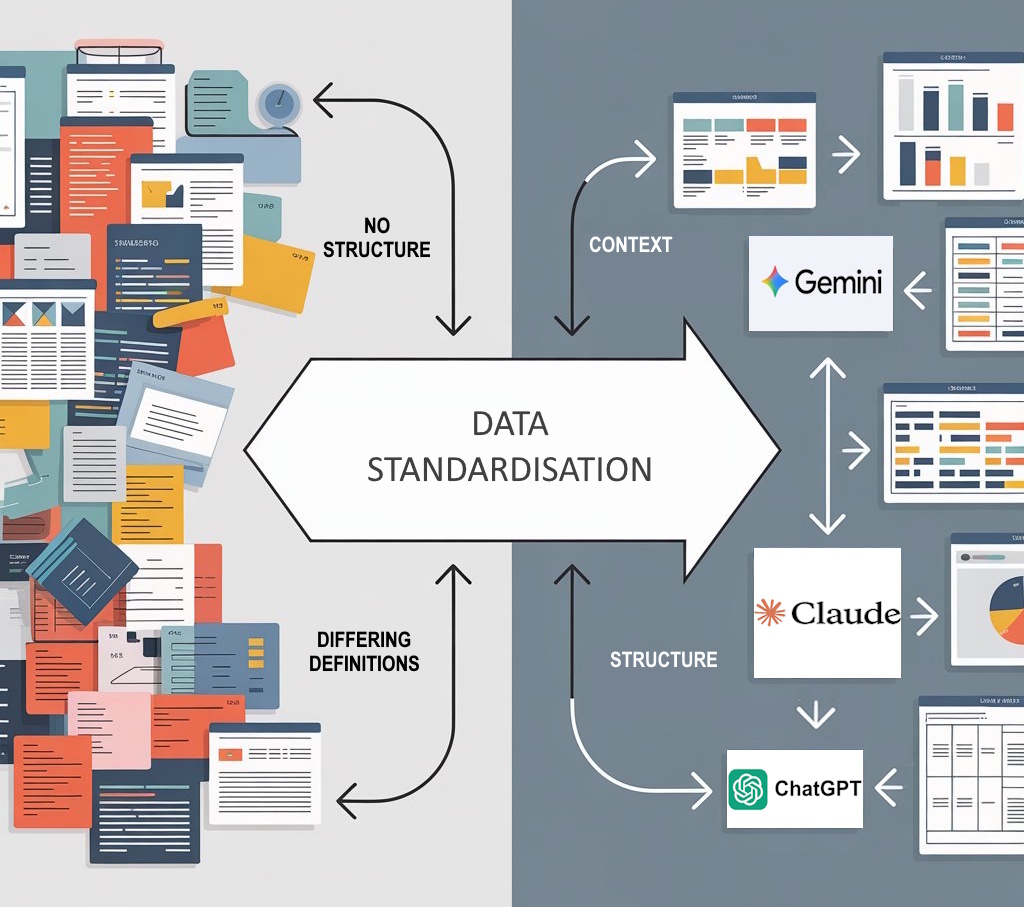
When an AI chatbot tells an investor that revenue jumped 40%, but instead it fell, the issue probably isn’t the AI model, it’s most likely the fragmented, inconsistent, and poorly structured data on the internet. Public datasets need to be “AI-ready”: structured with clear definitions, validated for quality, and enriched with semantic metadata that helps AI understand context. Standards like XBRL already provide this for financial reporting, but they need modernising to become a real semantic layer.
-

Digital First is Here
A growing number of European vendors can now offer genuine Digital-First reporting, which is a structured HTML document with XBRL tags built together from the start. Most of these are still early in their journey, but already serving clients for ESEF, CSRD, and local reporting frameworks. This article shares survey findings on the available Digital First tools and identifies what separates digital-first tagging and fully integrated corporate reporting from a simple PDF first approach.
-

The Potential of XBRL as a Semantic Layer
As enterprises increasingly adopt cloud-native platforms for data management, they begin to realise that the semantic layer is the piece that makes raw data meaningful to humans and to AI. XBRL already plays this role in regulatory reporting to help validate large volumes of submissions, so can XBRL extend into this wider data ecosystem and make for a richer, more intelligent layer for business information.
-

Digital Reporting and XBRL Multi Target Documents
The UK’s UKSEF framework does something unusual: it combines multiple XBRL taxonomies using a Multi Target Document (MTD) approach, rather than providing a single base taxonomy. It is a choice that can create real headaches for vendors and analysts. Drawing on practitioner insight, this article asks why MTD would be chosen for a reporting framework, where it can earn its keep, and when it doesn’t.
-

Digital Financial Reporting and AI
Can AI reliably tag a financial report with XBRL? Research shows LLMs hit around 80% accuracy when reading annual reports unaided but perform notably better when working from XBRL-tagged data. Based on our own testing, we find AI tagging isn’t quite there yet without significant augmentation (RAG) of the LLM models, though it’s clearly coming.
-

What links Datapoints, Label Encoding, XBRL, and AI?
Generating a random, short code for referencing a data item in various IT systems is essential, however it introduces special challenges for how XBRL collection systems operate, as XBRL is a semantic approach. Meaningless codes used for XBRL labels costs the 27 European local authorities and thousands of banks submitting XBRL data in Europe. However, AI needs semantic relationships to understand data, so is DPM encoding also a barrier to AI adoption as well as a cost burden on regulatory reporting.
-

Integrated Digital Financial Reporting
Tagging PDF documents for regulatory reporting has real limits, which is why a new “Digital-First” approach, built on HTML content management and XBRL tagging, from the ground up, is emerging. It’s not a small shift: around 50,000 companies will need to comply under ESEF and, separately, under CSRD sustainability reporting. This article explores what that transition looks like in practice.